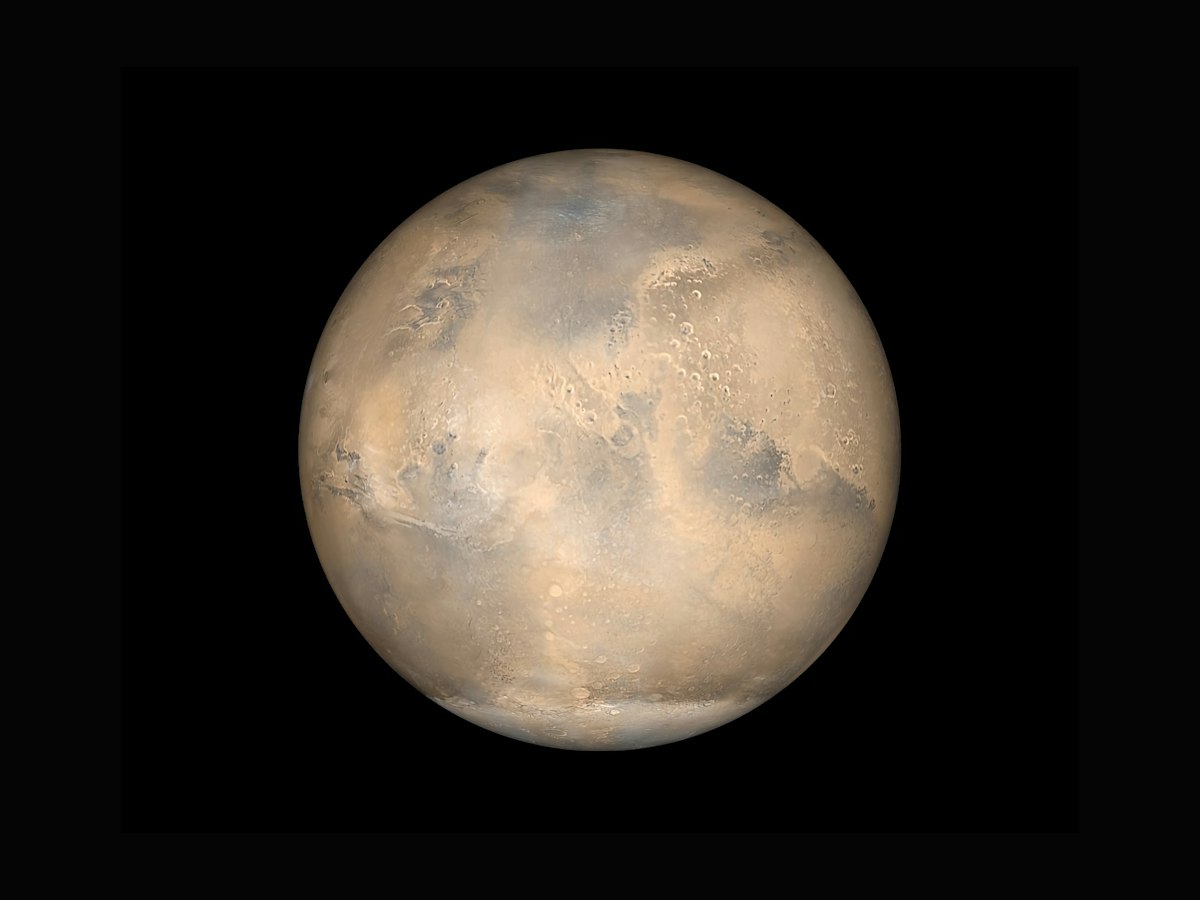
PASADENA — NASA scientists announced a landmark discovery Thursday: radar instruments aboard the Perseverance rover have confirmed the existence of a large liquid water body approximately three kilometres beneath the Martian south polar ice cap, potentially the most significant finding in the search for extraterrestrial life.
The reservoir, estimated to be roughly the size of Lake Superior, maintains liquid form due to the presence of dissolved salts and geothermal heat from Mars' partially active interior — conditions that, on Earth, have been found to support microbial life.
Implications for the Search for Life
"We are not saying there is life on Mars," said lead researcher Dr Amara Singh. "We are saying we have found the best candidate environment for life we've ever identified on another planet. That is extraordinary."
The discovery complicates future mission planning. Any probe designed to reach the water would need to drill through three kilometres of ice and rock — a feat that exceeds current robotic capabilities by an order of magnitude. NASA has already convened a task force to assess the technical and planetary protection requirements.
Astrobiologists worldwide described the finding as potentially the most important in the history of space exploration, though several urged caution until the results were independently replicated.